

Pictures: Nebula
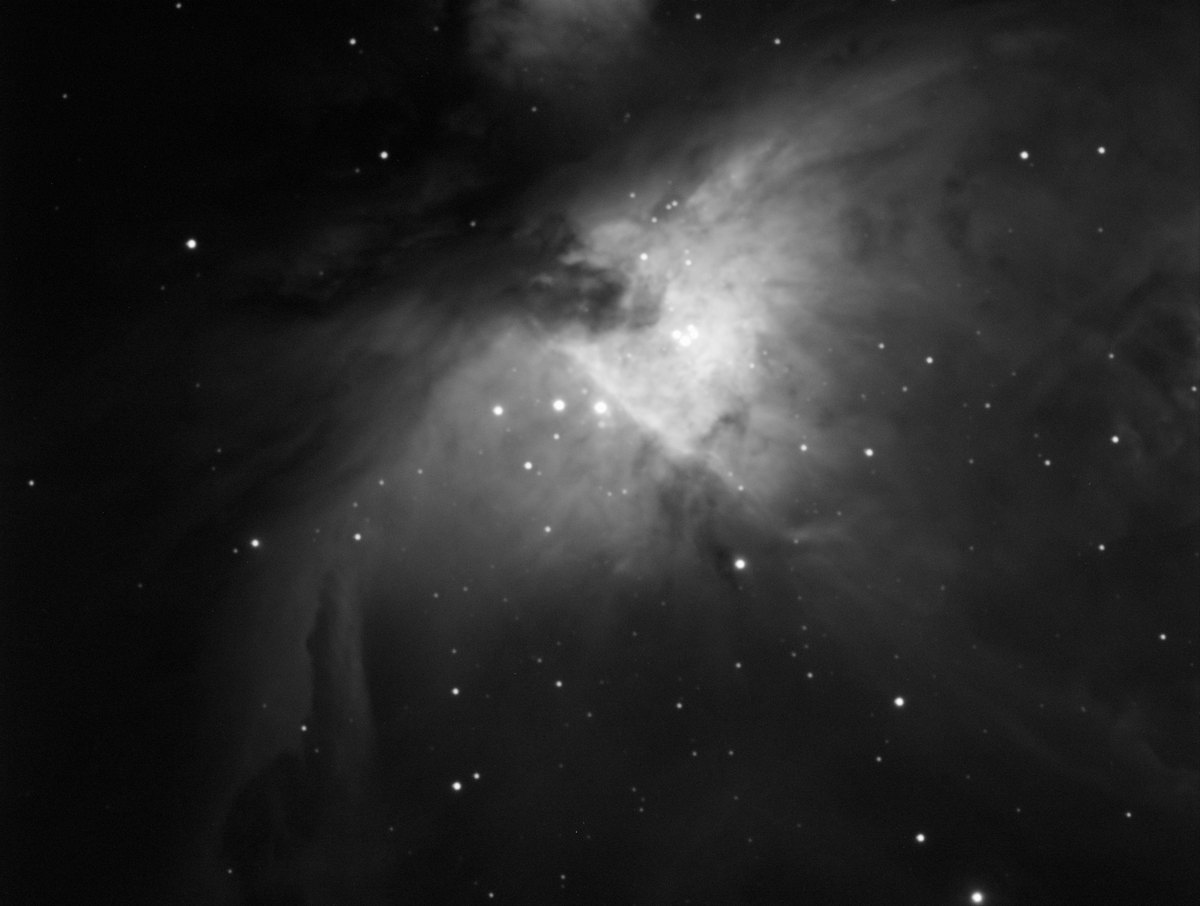
Located in Constellation Orion (the Hunter), in the sword below the belt. A star nursery about 1,340 light years away, and bright enough at magnitude 4 to see with your eyes alone from a dark site. Camera: ST-8300, November 2020.

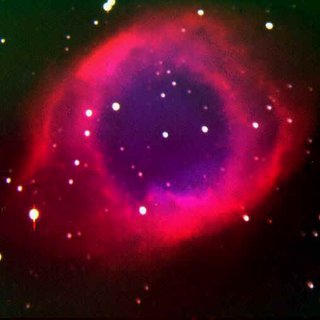
Located in Constellation Aquarius (the Water-Bearer), this planetary Nebula is 12.8 arc minutes across, with a visual magnitude of 7.3. The central star is magnitude 13.6. It is located about 650 light years away, and is one of the closest planetary nebulae to our sun. The surface brightness of the ring is so faint that it is very difficult to see with your eyes through the telescope.

Located in Constellation Taurus (the Bull), this supernova remnant was caused by a supernova in 1054 AD which the Chinese recorded observations of for over a year, and was so bright it could be seen in the daytime for 23 days. Its apparent size is 6 arc minutes by 4 arc minutes, and visual magnitude is 8.

Located in Constellation Serpens Cauda (the Snake's Tail), this emission Nebula is 35 arc minutes by 28 arc minutes, with a visual magnitude of 6. It is located 6,500 light years away, and is about 66 by 53 light years in size.

Located in Constellation Sagittarius (the Archer), this emission Nebula is 20 arc minutes by 15 arc minutes, with a visual magnitude of 6. It is located 5,500 light years away.
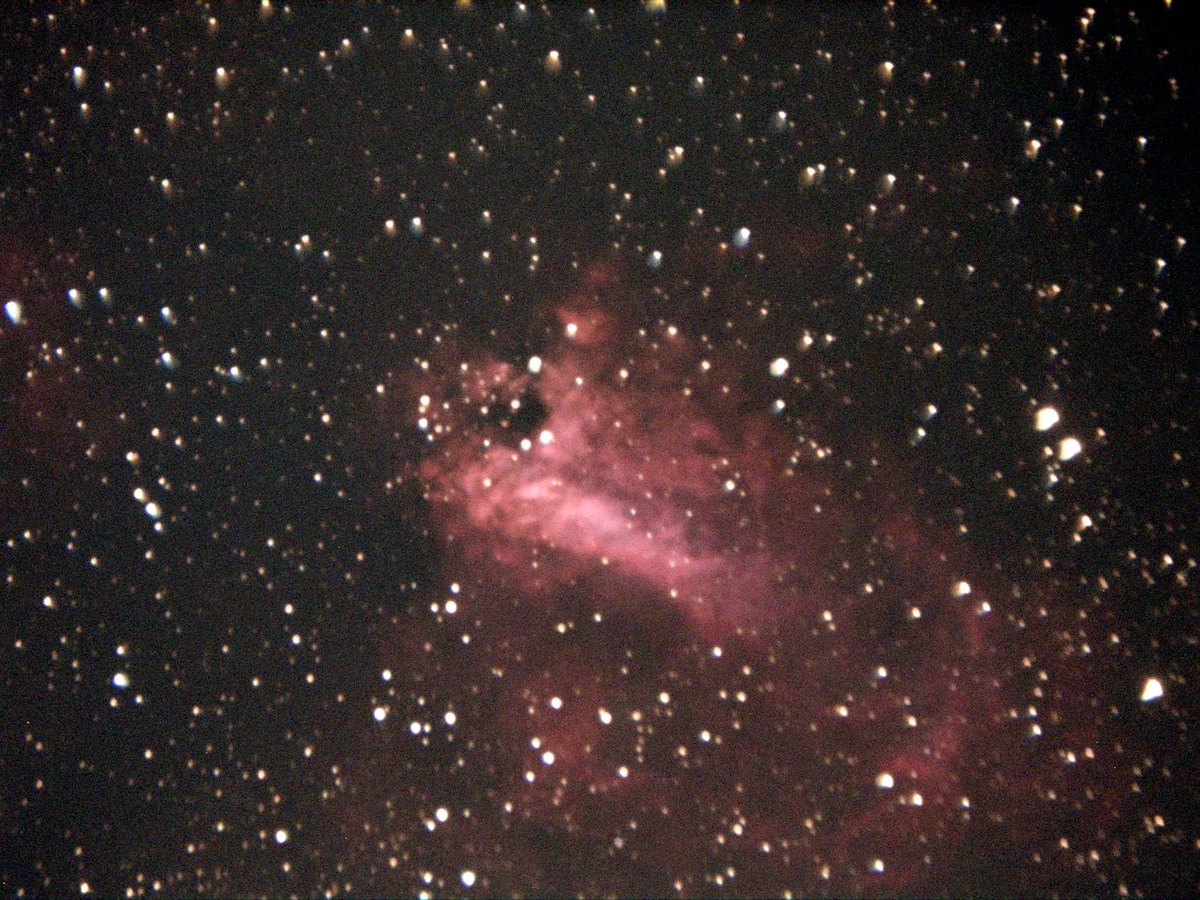
Located in Constellation Sagittarius (the Archer), a glowing cloud of hydrogen where new stars are forming, about 5,500 light years away, visual magnitude 6. Camera: ST-2000, August 2022.

Located in Constellation Sagittarius (the Archer), this emission and reflection Nebula is 20 arc minutes by 20 arc minutes, with a visual magnitude of 6.3. It is located 5,000 light years away.

Located in Constellation Vulpecula (the Fox), this Planetary Nebula is 5.8 arc minutes across, with a visual magnitude of 7.3

Located in Constellation Lyra (the Harp), this famous planetary Nebula is the shell of gas thrown off by a dying Sun-like star, and is 71 arc seconds across, with a visual magnitude of 8.8.

Located in Constellation Sagittarius (the Archer), this emission Nebula is 45 arc minutes by 30 arc minutes, with a visual magnitude of 6. It is located 5,200 light years away, and is about 60 by 38 light years in size. Embedded inside the nebula is NGC 6530, an open cluster of 113 stars, with an overall magnitude of 4.6. The brightest star in the picture, to the left of the center, is labeled 9 Sagittarii, and provides most of the illumination for that part of the nebula. 9 Sagittarii is a pair of hot O type stars, each several hundred thousand times brighter than our own sun, even more than that in ultraviolet light!

Located in Constellation Cygnus (the Swan), this emission Nebula is the remnants of a supernova explosion, and is 60 arc minutes by 8 arc minutes. It is so large that a mosaic of several CCD pictures would be needed to show its entirety.

Located in Constellation Canis Major (the Big Dog), this emission Nebula is 9 arc minutes by 6 arc minutes, and is also sometimes called the Duck Nebula.

Located in Constellation Orion (the Hunter), this very hard to see dark Nebula is 6 arc minutes by 4 arc minutes in size. The Emission Nebula behind it is a much larger 60 arc minutes by 10 arc minutes. Even with 16 to 18 inch telescopes, this horse head shape can still be too faint to see with your eyes alone.